



The Evolution of Clothing from the Safavid to the Qajar
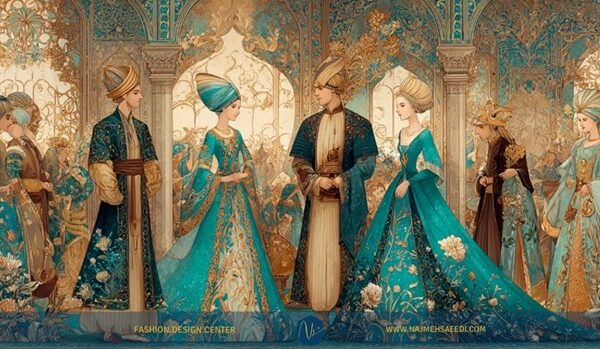
Clothing in Iranian culture has always been far more than a means of covering the body; it has served as a reflection of the history, identity, power, and aesthetic values of the people of each era. Among the various periods of Iranian history, the period from the Safavid to the Qajar era stands out as one of the most significant phases in the evolution of Iranian dress. It was a time when clothing became a language of civilization and, from the royal court to the streets, narrated the social, cultural, and even political transformations of the time.
The Splendor of Clothing in the Safavid Era
Clothing as a Symbol of Power, Religion, and Art
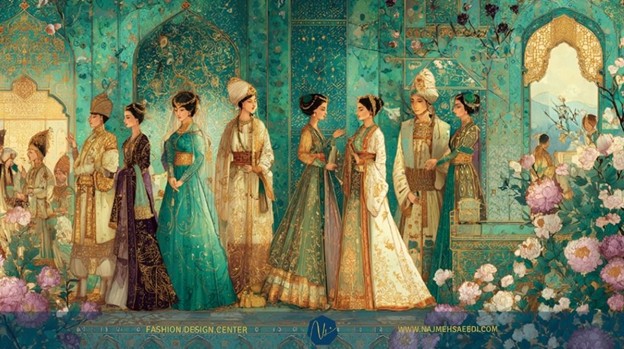
The Safavid era (16th to 18th centuries CE) marked the peak of textile and clothing artistry in Iran. With the establishment of Shi’a Islam as the state religion and the consolidation of the capital in Isfahan, Iranian clothing came to embody cultural unity, courtly order, and artistic beauty.
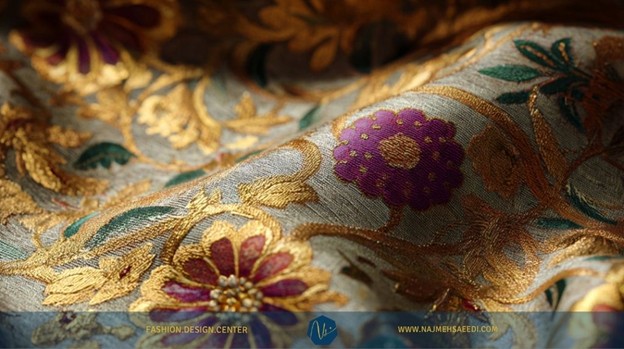
During this period, textiles were not merely garments; they were carriers of meaning
-
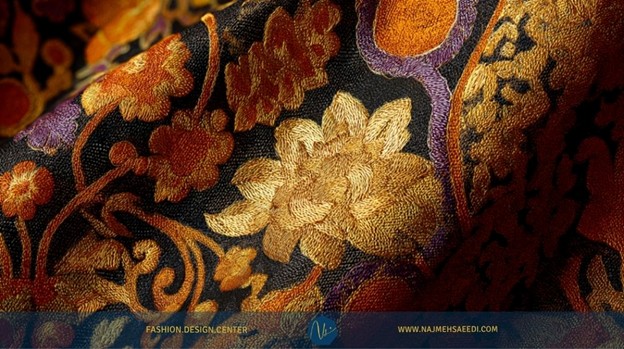
Gold- and silver-threaded brocades and Kashan velvets symbolized royal splendor.
- Shah Abbasi floral motifs, curved cypress trees, and pomegranates were woven into geometric repeating patterns, representing concepts such as eternity, humility, and prosperity.
-
Colors carried symbolic meanings:
- Turquoise = spirituality and tranquility
- Red = grandeur and energy
-
Green = spirituality and religious devotion
At the Safavid court, women’s clothing included ornate chadors, silk robes, and fitted silk trousers, while men wore long robes, decorative belts, and colorful turbans.
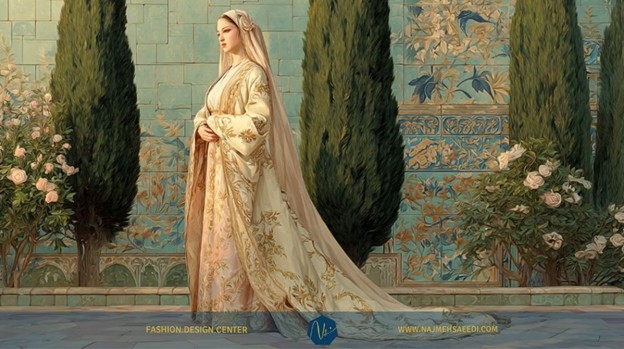
Clothing was not only a marker of social status; it was also an expression of Iranian identity and cultural heritage.
Tailoring Techniques and Garment Construction in the Safavid Era
During this period, garments were tailored and cut with great precision and craftsmanship. Fabrics were sewn in multiple layers to provide both durability and a structured silhouette.
Court tailors worked in royal workshops, particularly in Isfahan and Yazd, using exquisite embroidery and gold threadwork along the edges of garments.
The clothing of nobles and religious scholars was clearly distinguished from that of ordinary people, while the clothing of the general population was simpler, yet still inspired by traditional Iranian colors and motifs.
From the Safavid to the Qajar Era: The Transition from Tradition to Modernity
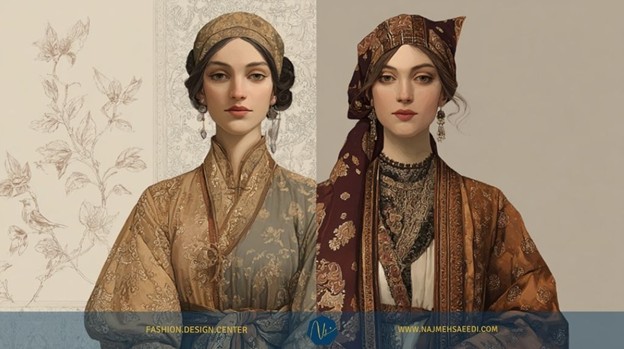
With the collapse of the Safavid dynasty and the beginning of the Afsharid and Zand periods, clothing gradually became simpler and more practical.
However, during the Qajar era (19th century CE), a remarkable transformation took place. The influence of the West, the emergence of a middle class, and the introduction of European fashion caused Iranian clothing, for the first time, to oscillate between tradition and modernity.
Qajar Court Fashion: A Blend of Luxury and Change
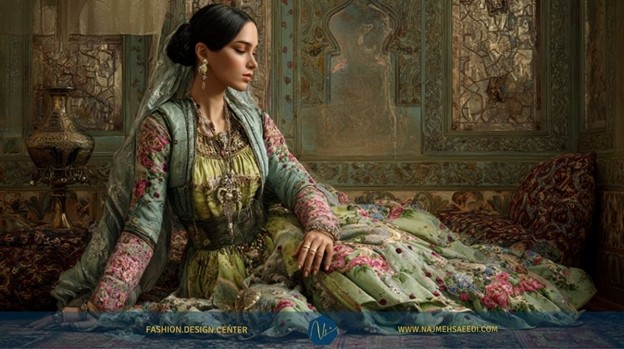
During the Qajar period, the royal court became a showcase of grandeur and opulence.
-
-
Qajar men wore brimmed hats, short jackets, and fitted trousers, influenced by European military uniforms.
- Aristocratic women wore layered dresses, full pleated skirts, and brightly colored silk shawls.
- Garment tailoring evolved under the influence of Paris and St. Petersburg, while Iranian textiles continued to be handwoven.
During this period, court photography and paintings transformed clothing into a visual medium; for the first time, fashion in Iran acquired a distinct visual identity.
Symbols and Textiles Through the Ages
From the Safavid to the Qajar era, Iranian textiles continued to carry cultural symbolism:
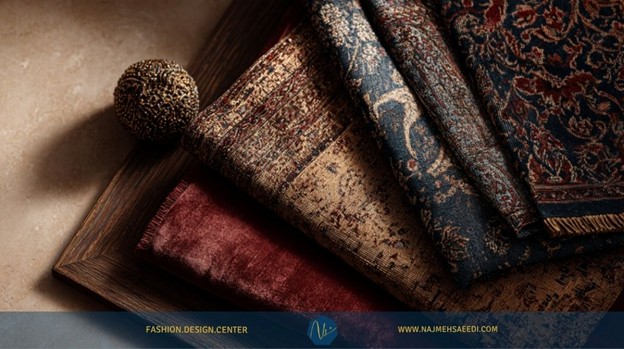
- Termeh (Yazd), featuring the Boteh Jegheh motif, symbolized continuity and the cycle of life.
- Qalamkar (Isfahan), a popular printed textile, featured narrative motifs of flowers, birds, and human figures.
- Gold-threaded velvet, a symbol of royal grandeur and wealth.
-
Each motif and color conveyed a sense of status and identity.
For example:
- Curved cypress tree = humility before the Creator
- Lion and Sun = national authority
- Flowers and birds = mystical love and the delicacy of the Iranian spirit
Traditional Textile Production Techniques
Textile workshops in Yazd, Kashan, and Isfahan were the beating heart of Iran’s textile industry. Natural dyes such as indigo, madder, walnut husks, and saffron were used for dyeing.
Women played an important role in the spinning and dyeing processes, with skills and techniques passed down from generation to generation.
The Influence of These Eras on Contemporary Fashion Design
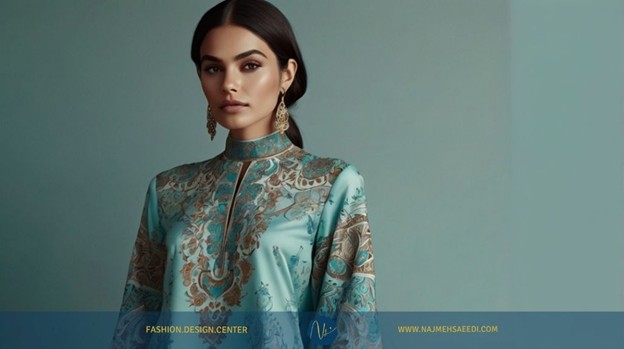
Safavid and Qajar garments continue to inspire many Iranian designers today.
-
-
Motifs such as Gol-o-Morgh (flowers and birds), Boteh Jegheh, and Termeh have been revived in modern fashion collections.
- Contemporary designers incorporate authentic Iranian colors such as turquoise, lapis lazuli blue, and gold into minimalist styles.
- This return to cultural roots is not a mere repetition of the past, but rather a contemporary interpretation of Iranian culture.
In today’s world, where global fashion has often become increasingly uniform, Iranian clothing, drawing upon its rich artistic heritage, has the potential to leave a lasting signature on the international fashion scene.
Conclusion
The evolution of clothing from the Safavid to the Qajar era was not merely a transformation in garment forms; it reflected the cultural, artistic, and social transformations of Iran.
From Shah Abbasi’s gold-threaded robes to the pleated skirts of the Qajar era, every thread and motif tells a story of Iranian identity — an identity that continues to live on through the work of contemporary designers.
-

